
The Science of Behavior Change
Behavior changes when learning reaches the whole person.
People need more than information. They need conviction, clarity, practice, reflection, and reinforcement working together so new behaviors become easier to recognize, repeat, and sustain in the moments that matter.
For more than 35 years, Eagles Flight has designed learning experiences around that simple truth.

What We Have Learned About How People Change.
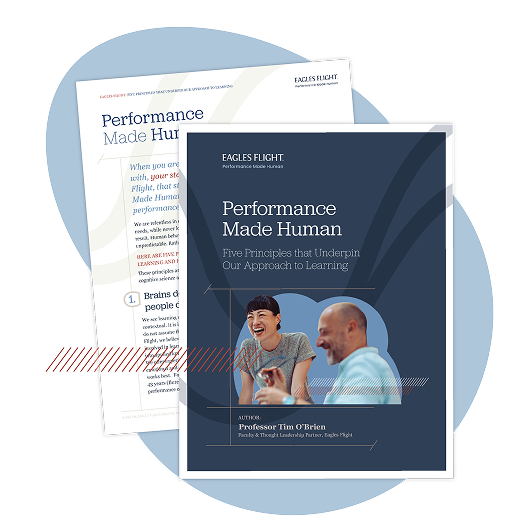
Performance Made Human is more than a tagline. It reflects our belief that exceptional business performance begins with understanding people.
Human behavior is complex. It is shaped by emotion, experience, relationships, habits, and context. Rather than working around that complexity, we design learning informed by behavioral science, cognitive science, and the science of learning.
Five principles have consistently shaped our approach. They are explored in greater depth in our behavioral science provocation piece.
From Principles to Practice
The challenge is not understanding these principles. The challenge is designing learning around them.
At the centre of Eagles Flight’s approach is a simple behavior change model: Heart, Head, Hands, and Harvest. These four elements are not a sequence to complete once. They form a continuous cycle that helps people strengthen capability over time.
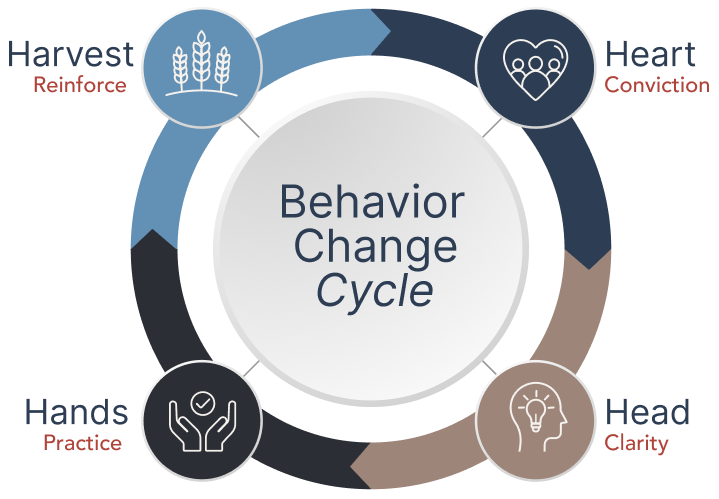
Capability grows as each cycle builds on the last. Every experience creates new conviction, deeper understanding, stronger capability, and fresh opportunities to learn again.


Learning Continues
Beyond the Experience
Most development does not happen during a workshop, learning experience, or training session.
It happens afterwards, when people return to the realities of work and begin applying what they have learned.
This principle is often described through the 70:20:10 framework, which recognizes that formal learning is only one part of how people develop.
If organizations want behavior change to last, they must think beyond the learning event itself and create opportunities for application, reflection, and reinforcement over time.

The Power of Experience
People change when learning becomes personal.
Our themed learning experiences create controlled environments where people can see the consequences of their decisions, recognize patterns in their behavior, and connect those insights back to the realities of work.
The experience is one part of the broader behavior change system. It is often where conviction begins, understanding deepens, and people become ready to practice new behaviors before applying them in the realities of work.
Client Stories
Organizations apply these principles in different ways depending on their goals, challenges, and environment. What connects them is a focus on helping people adopt and reinforce behaviors that support stronger performance.

Aecon
Building Leadership Consistency Across Canada’s Most Complex Jobsites
Leadership expectations were clear, but execution varied across projects, locations, and teams. Discover how Aecon created a shared leadership language that brought greater consistency to one of Canada’s most complex construction environments.

Western Union
Making Customer-First Behavior Stick Across 54 Countries
Customer-first was the strategy, but sustaining it across 54 countries required more than training. See how Western Union built consistent customer behaviors that lasted beyond the initial launch.

Merck
When Safety Systems Aren’t Enough: How Merck Moved from Compliance to Conviction
Safety systems, audits, and standards were already in place, yet risk exposure persisted. Learn how Merck shifted safety from compliance to personal ownership across its global manufacturing network.
How We Help Improve Organizational Performance
Organizations invest in leadership, execution, safety, and change because they are trying to improve performance.
The principles on this page provide the foundation. How they are applied depends on the challenge being solved and the behaviors that need to change.

Improve Leadership Effectiveness
Strong leadership creates greater alignment, accountability, and trust across teams.
We help leaders strengthen the behaviors that shape what people notice, prioritize, and ultimately believe matters when the pressure is on.

Create Consistent Execution Across Teams & Locations
Consistent execution turns strategy into results across teams, functions, and locations.
We help organizations strengthen the behaviors and decision-making practices that reduce variation and improve follow-through.

Strengthen Safety, Financial & Reputational Risk Performance
The moments that carry the greatest risk rarely announce themselves in advance. We help organizations strengthen the behaviors that support awareness, judgment, communication, and accountability when conditions become complex or uncertain.

Lead Change That Sticks in an AI-enabled world
Successful change becomes visible when new behaviors show up consistently in everyday work.
We help leaders and teams identify, practice, and reinforce the behaviors that help change gain traction and endure over time.
Ready to Continue the Conversation?
Performance improves when people consistently apply the behaviors that matter most.
The question is which behaviors will create the greatest impact for your organization, and how they can be strengthened over time.
Frequently Asked Questions
Training often focuses on transferring information or building awareness. Our work focuses on helping people understand, practice, and reinforce behaviors that need to show up in real work.
Experiential learning is an approach that helps people learn through realistic experience, reflection, and application rather than information alone. By making behaviors visible in meaningful situations, people better understand why those behaviors matter and are more prepared to apply them in everyday work.
People return to environments filled with pressure, habits, competing priorities, and existing routines. Reinforcement helps new behaviors remain visible, practiced, and expected after the learning experience ends.
Yes. The specific behavior changes depending on the challenge, but the underlying principles remain consistent. Leadership, execution, safety, and change all depend on what people do when decisions carry consequences.
Measurement begins with clarity. The organization needs to define what behavior should change, where it should show up, and what outcomes it is meant to support. From there, measurement can focus on application, reinforcement, and business impact.