
Build Leadership Effectiveness
Leadership influences every part of organizational performance because leaders influence every part of how work gets done.
The priorities they reinforce, the conversations they encourage, and the behaviours they model shape how people make decisions, work together, and respond when pressure rises.

Leadership is not revealed in the plan. It is revealed under pressure.
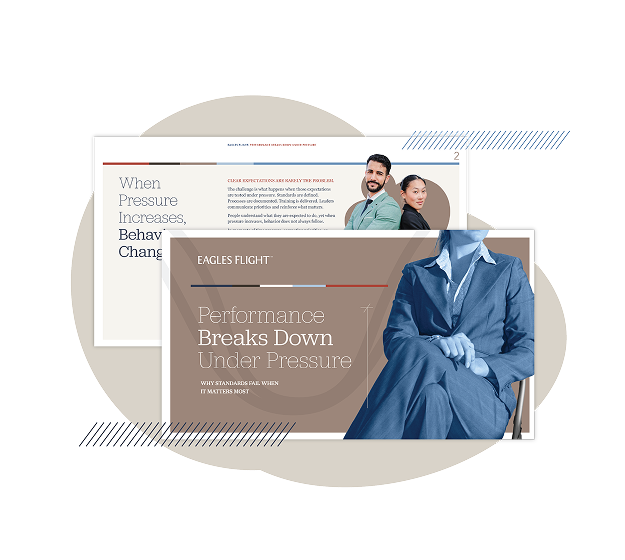
Most leadership conversations focus on what leaders should do. We have found it equally valuable to understand what people experience from their leaders when priorities compete, pressure rises, and difficult trade-offs must be made.
Those moments reveal the behaviours that build trust, create alignment, reinforce accountability, and ultimately shape organizational performance.
The Performance Under Pressure Guide explores the patterns we’ve observed, the questions they raise, and how leaders can recognize them in their own organizations before they become embedded in the culture.
Client Stories
Organizations develop leaders for different reasons, but the common thread is helping people make better decisions, create
stronger alignment, and lead more effectively when the outcome matters.

Aecon
Building Leadership Consistency Across Canada’s Most Complex Jobsites
As Aecon expanded across Canada, leadership expectations were clear, but execution varied from project to project. Discover how Eagle’s Flight helped create a shared leadership language that brought greater consistency across more than 3,000 leaders and employees.

BMO (Bank of Montreal and Bank of the West)
From Strategy to Action: How BMO Turned Growth Priorities into Leader Commitments
The strategy was clear. The challenge was turning enterprise priorities into consistent leadership behaviours. See how BMO helped 350 senior leaders translate growth strategy into personal commitments that drove execution.
The Five Capabilities of Leadership Effectiveness
Leadership influences organizational performance in many different ways. It cannot be developed through a single skill, competency, or learning experience.
Lasting leadership effectiveness comes from strengthening a combination of capabilities that influence how leaders think, relate to others, drive performance, and lead themselves.
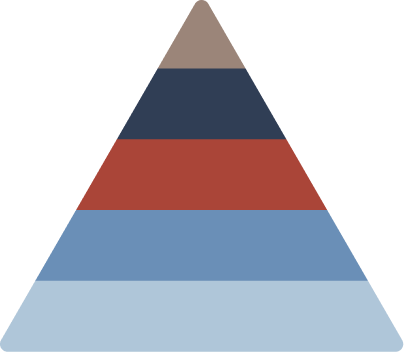
- The Mindset of a World-Class Leader
- Improving Organizational Performance
- Interpersonal Excellence
- Foundational Skills of a Leader
- Optimizing Personal Performance
Explore the five capability areas below to see how each contributes to stronger leadership performance.
The Mindset of a World Class Leader
World-class leadership requires more than individual capabilities.
Leaders strengthen organizational performance by balancing competing priorities, recognizing potential, making sound decisions under pressure, and focusing attention where it creates the greatest impact. This mindset brings every leadership capability together.
- Build a leadership mindset that develops people and performance.
- Recognize and unlock the potential of individuals and teams.
- Make better decisions under pressure.
- Focus attention on the priorities that create the greatest impact.
- Create the conviction needed to lead meaningful change.
- Create accountability that improves execution.
- Align teams around shared priorities and goals.
- Empower people to take ownership and initiative.
- Lead teams through change while maintaining performance.
- Build stronger collaboration across functions and locations.
Improving Organizational Performance
Organizations perform better when leaders create the conditions for others to succeed.
Clarity, accountability, aligned priorities, and shared ownership enable people and teams to perform consistently across the organization. Leadership extends beyond managing individuals to shaping the conditions that drive organizational performance.
Interpersonal Excellence
Leadership is experienced through everyday interactions.
Every conversation strengthens or weakens trust. Leaders who communicate clearly, influence effectively, provide meaningful feedback, and build strong relationships create the conditions for collaboration and sustained performance.
- Build trust through stronger communication.
- Deliver feedback that improves performance.
- Influence without relying on formal authority.
- Collaborate more effectively across teams.
- Build relationships that support long-term success.
- Coach people for improved performance.
- Set meaningful goals that create alignment.
- Assess strengths and development opportunities.
- Support continuous learning and growth.
- Build confidence through ongoing development conversations.
Foundational Skills of a Leader
Leadership becomes visible through everyday behaviours.
Coaching, developing, and supporting others are not occasional leadership activities. They establish expectations, build capability, and make leadership part of everyday work.
Optimizing Personal Performance
Organizations depend on leaders who consistently demonstrate the behaviours they expect from others.
Leaders who manage priorities, communicate clearly, and execute consistently establish the standards that shape team performance. Personal effectiveness creates the foundation for leadership effectiveness and stronger organizational performance.
- Manage priorities in demanding environments.
- Communicate ideas with greater clarity and impact.
- Tell compelling stories that inspire action.
- Improve personal and team productivity.
- Execute strategy with greater consistency.
- Teach and reinforce behaviors that sustain performance.
How We Develop Leadership Capability
Every Eagles Flight leadership engagement combines behavioral science, expert facilitation, experiential learning, reinforcement, and measurement to help leaders develop the capabilities that improve performance.

BEHAVIORAL SCIENCE
Identifies the leadership behaviors that have the greatest influence on performance and uses behavioral science to shape every learning experience.

EXPERIENTIAL LEARNING & SKILL FRAMEWORKS
Gives leaders the opportunity to practise critical decisions and behaviours in realistic, pressure-filled situations.

EXPERT FACILITATION
Creates the conditions for meaningful discussion, practical application, and lasting behavioural change.

REINFORCEMENT
Extends learning beyond the experience through coaching, practical application, and digital reinforcement to help new leadership behaviours become everyday habits.

MEASUREMENT
Evaluates progress, reinforces success, and guides continued leadership development over time.

STRONGER BEHAVIORS. BETTER PERFORMANCE. LASTING IMPACT.
Delivered Wherever Leadership Learning has the greatest impact
Flexible delivery options

In Person
Immersive, facilitator-led experiences that build connection, insight, and practical application.

Virtual
Interactive learning that engages leaders wherever they are.
Delivery and engagement formats
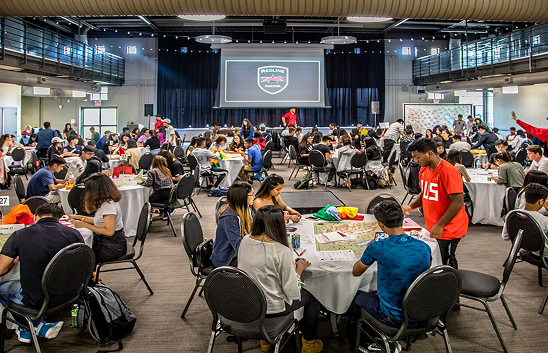
Global Delivery

Conferences & Kickoffs
Leadership experiences that align people around strategic priorities and accelerate momentum.
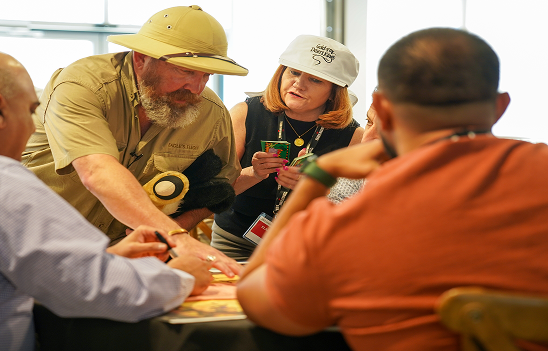
Themed Learning Experiences
Immersive themed learning experiences designed to create lasting leadership impact.
Different formats. One integrated system.
One goal: stronger leaders in the moments that matter.
Building The Right Leadership Journey

Every organization begins from a different place. Leadership priorities vary, but the goal remains the same: building the behaviours that strengthen organizational performance.
The right journey is shaped by the capabilities leaders need to develop, the behaviours that need to change, and the business outcomes those behaviours are intended to support.
Eagles Flight combines proven learning experiences, practical skill development, application, and reinforcement into leadership journeys designed around your organization’s needs because lasting leadership capability is built over time, not in a single learning event.
The Science of Behavior Change
Creating lasting leadership behaviour change requires more than information alone. People need to understand why a behaviour matters, practise it in realistic conditions, and reinforce it until it becomes part of how work gets done.
Explore the behavioural science principles that shape our approach to developing leadership capability and strengthening the behaviours that drive organizational performance.
What Do People Learn From Your Leaders?
Leadership influences performance long before a decision becomes visible in a report, scorecard, or business result. It shapes what teams notice, prioritize, reinforce, and ultimately believe matters.
If you’d like to explore the leadership behaviors shaping performance in your organization, we’d be happy to continue the conversation.
Frequently Asked Questions
Leadership effectiveness is reflected in a leader’s ability to consistently create alignment, accountability, trust, and strong team performance, especially when priorities compete and pressure rises. Leadership development programs often focus on building knowledge. The greater challenge is helping leaders consistently apply that knowledge when priorities compete and pressure rises. Our experiential leadership development programs are designed to build leadership effectiveness by helping leaders strengthen the behaviors that shape decisions, alignment, accountability, and team performance in the moments that matter.
We believe leadership is not built through information alone. Lasting leadership behavior change happens when leaders understand why a behaviour matters, practise it in realistic situations, receive meaningful feedback, and reinforce new habits over time. Our experiential approach is designed to help those behaviours become part of everyday leadership rather than remaining concepts discussed in a classroom.
Leadership effectiveness rarely improves because leaders attend another course. It improves when leaders become more consistent in the behaviors their teams experience every day. That includes how they communicate priorities, coach performance, make decisions, build trust, and respond under pressure. Development is most effective when those behaviors are practised, observed, and reinforced over time.
Leadership is easiest to evaluate when conditions are stable. The real test comes when priorities compete, information is incomplete, and difficult trade-offs must be made. Leadership performance under pressure describes how consistently leaders demonstrate the behaviors their teams rely on in those moments. Those behaviors often shape trust, execution, and organizational performance long before results appear in a report or scorecard.
Our leadership development programs support leaders at every level of an organization, from emerging leaders to senior executives. Rather than delivering the same experience to every audience, we build leadership journeys around the capabilities, business priorities, and behavioural outcomes that matter most to each organization.
Yes, but lasting leadership behaviors change requires more than awareness. People are far more likely to adopt new behaviors when they understand why those behaviors matter, have opportunities to practise them in realistic conditions, receive coaching and feedback, and are supported through ongoing reinforcement. That combination helps new behaviors become part of everyday work.
Leadership effectiveness is reflected in the behaviors leaders demonstrate and the results those behaviors produce. Organizations often evaluate progress through observable leadership behaviors, employee engagement, accountability, team performance, execution, and business outcomes. The goal is not simply to measure learning, but to understand whether leadership is improving performance where it matters most.
There is no single timeline because every organization begins from a different place. Individual learning experiences can create important breakthroughs, but lasting leadership effectiveness is built through continued application, reinforcement, coaching, and practice over time. Sustainable change is the result of a journey, not a single event.